Half Double Crochet in Just 10 Minutes (Easy Tutorial)
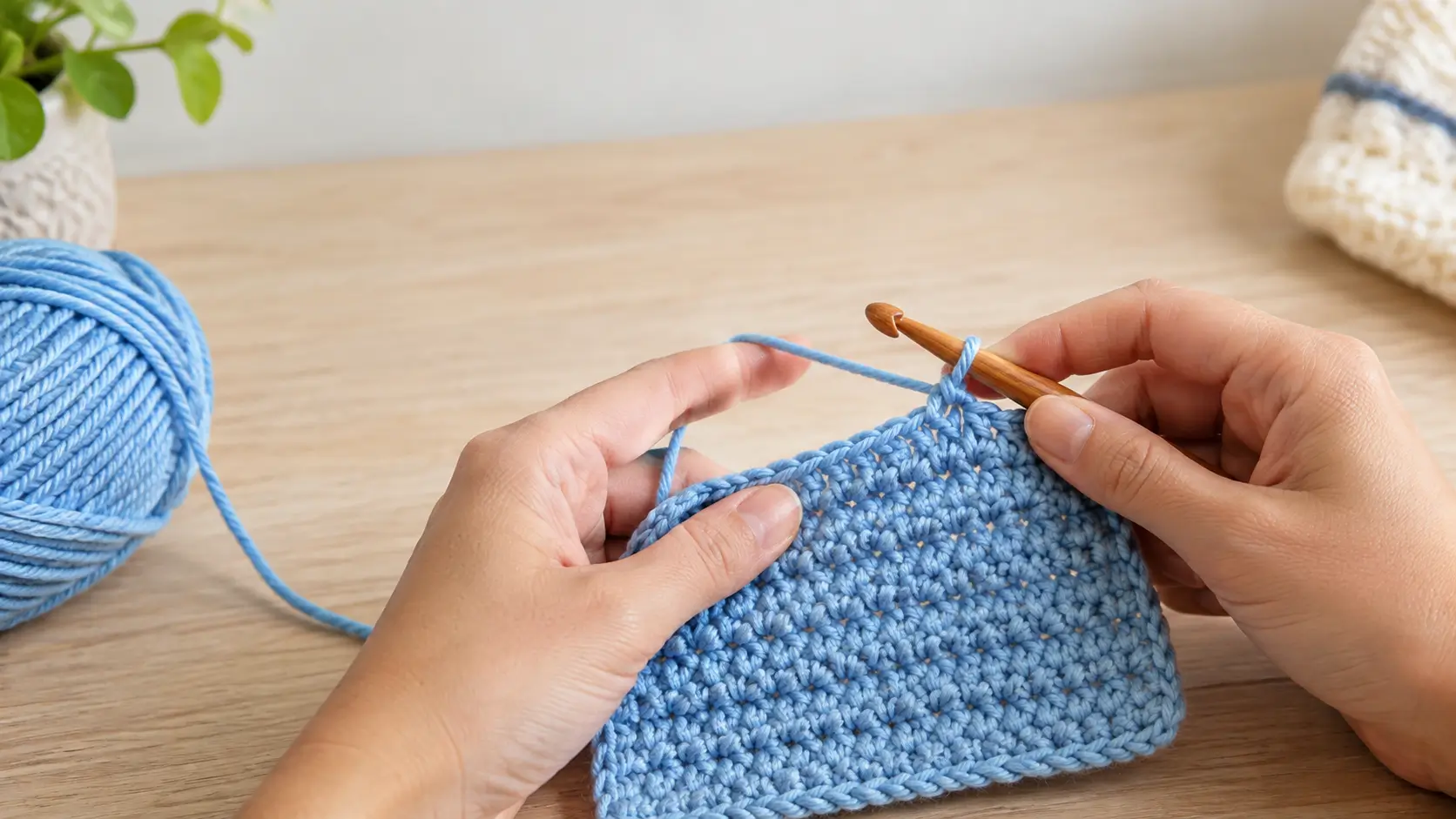
Half double crochet is one of the most useful stitches you can add to your crochet toolkit, and this tutorial breaks it down into simple steps so you can learn it in just 10 minutes. It sits perfectly between single crochet and double crochet in height, giving you a fabric that’s denser than double crochet but faster to work than single crochet — which makes it a favorite for blankets, hats, and quick-working projects.
This half double crochet tutorial is written with extra attention to hand positioning and yarn tension, since those small details are what separate even, professional-looking stitches from uneven, wobbly ones. It’s a great next step for anyone who’s comfortable with basic single crochet and wants to expand their stitch library. Below, you’ll find everything from what makes this stitch unique to the common mistakes that trip up most beginners, plus where this versatile stitch shows up across real projects.
Table of Contents
What Is Half Double Crochet?
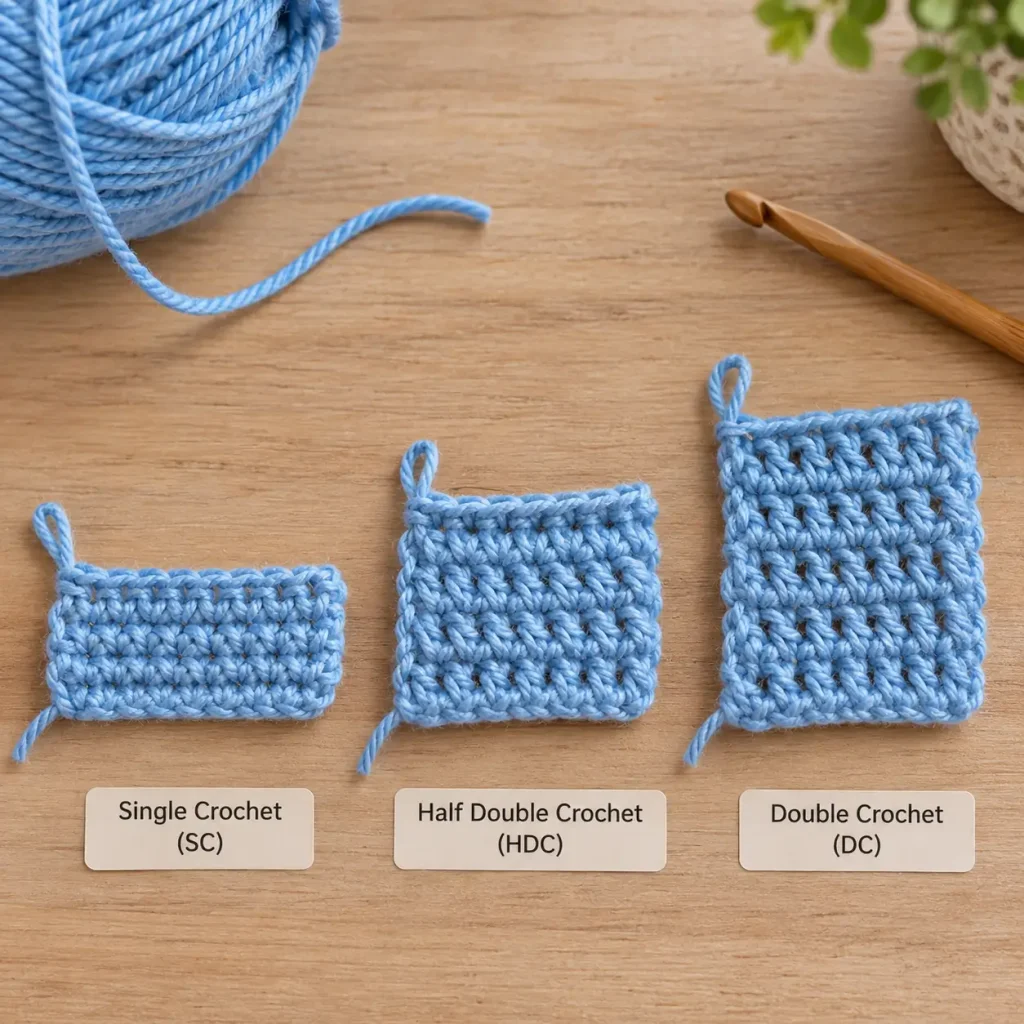
Half double crochet (abbreviated hdc) is a stitch that falls in height between single crochet (sc) and double crochet (dc). It gets its name because it uses the same starting motion as a double crochet — yarn over before inserting the hook — but skips one of the “pull through” steps that a full double crochet requires. This one small difference is what gives half double crochet its distinctive, slightly denser texture compared to a full double crochet fabric.
Because of its middle-ground height, half double crochet works up faster than single crochet while still producing a thicker, warmer fabric than double crochet — which is exactly why it’s so popular for blankets, baby items, and hats.
It’s worth noting that stitch names and abbreviations can vary between regions. This tutorial uses standard US crochet terminology, which is also the terminology used in most American pattern books and websites. If you’re working from a UK-published pattern, double-check the abbreviation key, since UK terminology assigns different names to stitches of the same height — a detail explained clearly by the Craft Yarn Council’s standard stitch guide, which is worth bookmarking as a reference for any pattern you work from in the future.
What You’ll Need
This half double crochet tutorial requires minimal materials, making it easy to practice right away.
Materials:
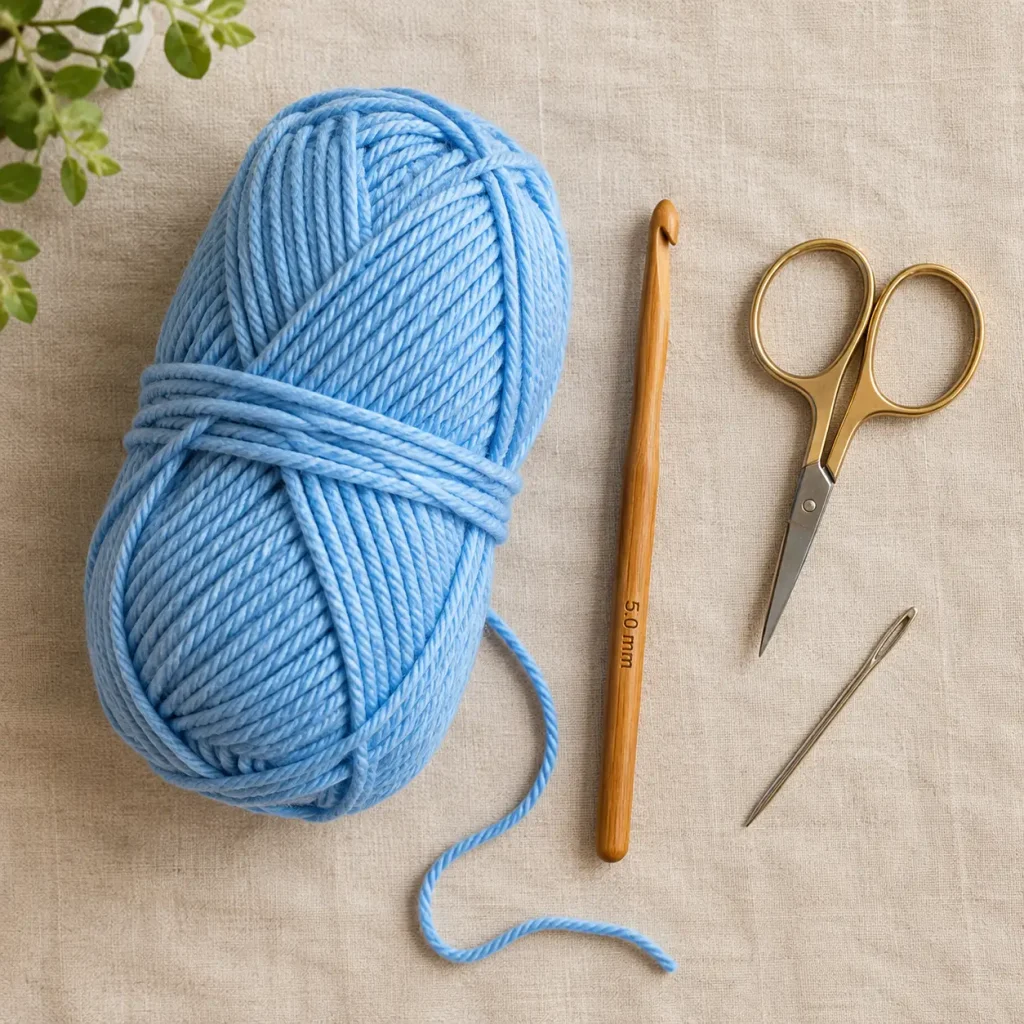
- Any worsted weight (size 4) yarn — a light or bright color makes it easier to see your stitches while learning
- A 5.0mm (H/8) hook, or the size recommended on your yarn label
- Scissors
- A tapestry needle (for weaving in ends once you’re done practicing)
Prep essentials:
- Familiarize yourself with these abbreviations before starting: yo (yarn over), ch (chain), hdc (half double crochet), st(s) (stitch/stitches).
- If you already know how to make a foundation chain and a single crochet stitch, you have everything you need to learn half double crochet — no new fundamental skills required.
- Practice in good lighting if possible. Because half double crochet involves an extra loop on the hook compared to single crochet, being able to clearly see each loop matters more while you’re still building muscle memory.
Step-by-Step Instructions
Follow this half double crochet tutorial slowly the first few times through — the motion becomes automatic quickly, but rushing early on tends to create uneven tension.
Step 1: Make Your Foundation Chain
- Chain 15. This gives you enough width to practice several stitches across.
- Count your chain carefully — an incorrect count here throws off your first row before you even start the stitch itself.
Pro tip: count your chain twice before moving on. A miscounted foundation chain is the most common reason beginners’ practice swatches come out lopsided.
Step 2: Position Your Hook
- Yarn over (wrap the yarn over your hook from back to front) before inserting your hook into a stitch. This is the step that makes half double crochet taller than single crochet — don’t skip it.
- Insert your hook into the third chain from the hook (the first two chains count as your starting height, sometimes called the “turning chain”).
Pro tip: the “yarn over first” step is the one detail people forget when switching from single crochet, since sc doesn’t start this way — make it a conscious habit for the first several stitches. Some crocheters find it helpful to say “yarn over, insert” out loud for the first row, simply to build the habit before it becomes automatic.
Step 3: Complete the Stitch
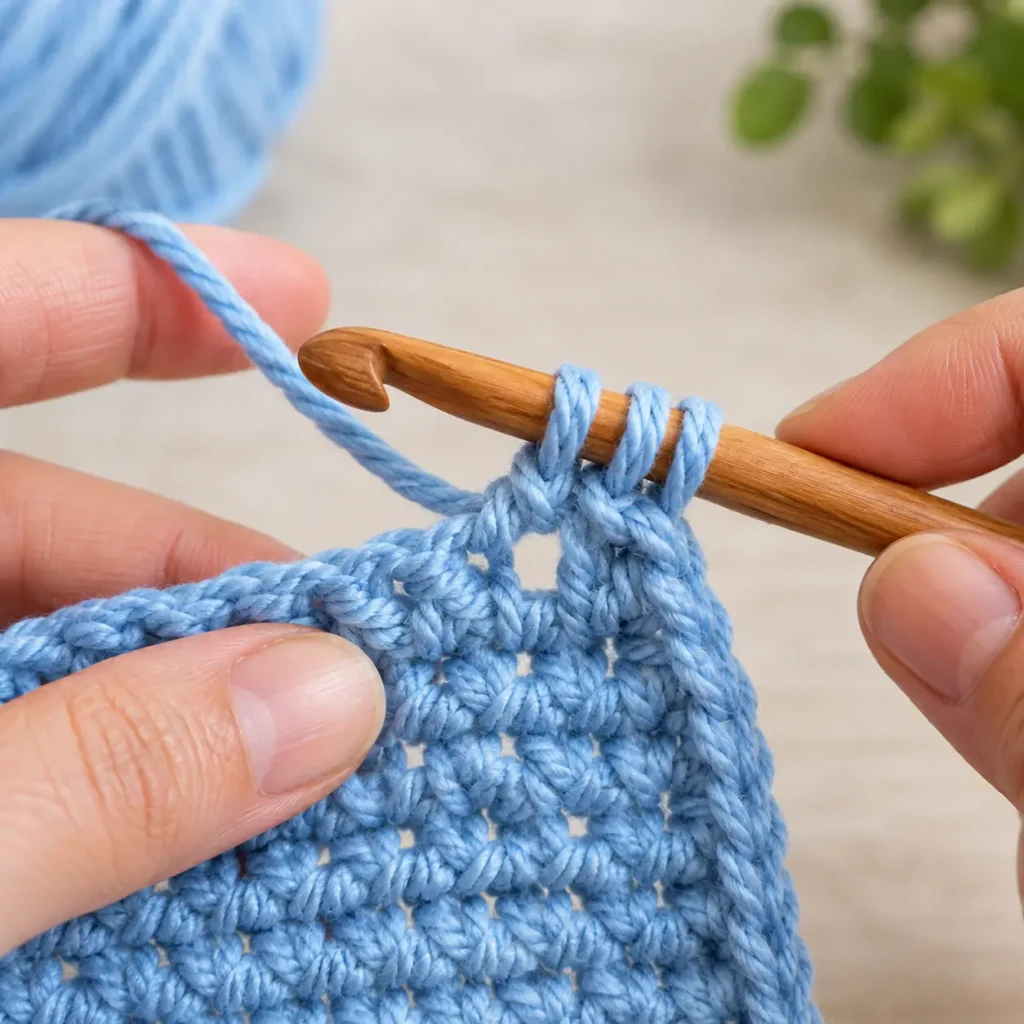
- Yarn over again and pull through the stitch. You should now have 3 loops on your hook.
- Yarn over one more time and pull through all 3 loops at once. This completes one half double crochet stitch.
Secret Trick: pulling through all 3 loops in a single motion (rather than two separate pull-throughs like a double crochet) is what makes this stitch distinctly “half” — if you find yourself pulling through in two steps, you’ve accidentally made a double crochet instead. If your hook feels crowded with 3 loops on it, try rotating your hook slightly toward you as you pull through — this small wrist motion makes the final pull-through noticeably easier without needing a larger hook.
Step 4: Continue Across the Row
- Repeat Steps 2 and 3 in each chain across the row.
- At the end of the row, chain 2 (this becomes your turning chain for the next row) and turn your work.
Doneness check: count your stitches at the end of the row — you should have 13 hdc stitches if you started with a chain of 15 (accounting for the 2 skipped chains at the start).
Step 5: Practice a Second Row
- Skip the first stitch (this is where your turning chain counts as your first stitch).
- Work an hdc into each stitch across, working your final stitch into the top of the turning chain from the previous row.
- Chain 2, turn, and repeat for several more rows until the motion feels natural.
Resting step: after 3-4 rows, lay your practice swatch flat and check that all your stitches look roughly the same height — this is a much easier moment to notice and correct tension issues than several rows later.
Common Mistakes to Avoid
- Forgetting the initial yarn over. This is the single most common half double crochet mistake for people coming from single crochet, since sc doesn’t require this step at all. If your rows look shorter than expected, this is usually the culprit.
- Pulling through all 3 loops in two motions instead of one. Doing this accidentally converts your stitch into a double crochet, which will make your rows uneven in height and your fabric noticeably taller than intended.
- Working into the wrong starting chain. Beginners often insert into the second chain from the hook (correct for single crochet) rather than the third chain (correct for half double crochet), which shortens the first stitch of the row.
- Inconsistent turning chain height. Using anything other than a chain-2 turning chain will throw off the height matching between rows, creating a stair-step effect along the edge of your work.
- Tension that’s too tight around the hook. Because half double crochet involves more loops on the hook at once than single crochet, overly tight tension makes the final pull-through much harder than it needs to be, and can distort the stitch shape.
- Losing track of the turning chain as a stitch. Some patterns count the turning chain as the first stitch of the row, others don’t — check your pattern’s notes, since this affects your total stitch count at the end of each row.
Where Half Double Crochet Is Used
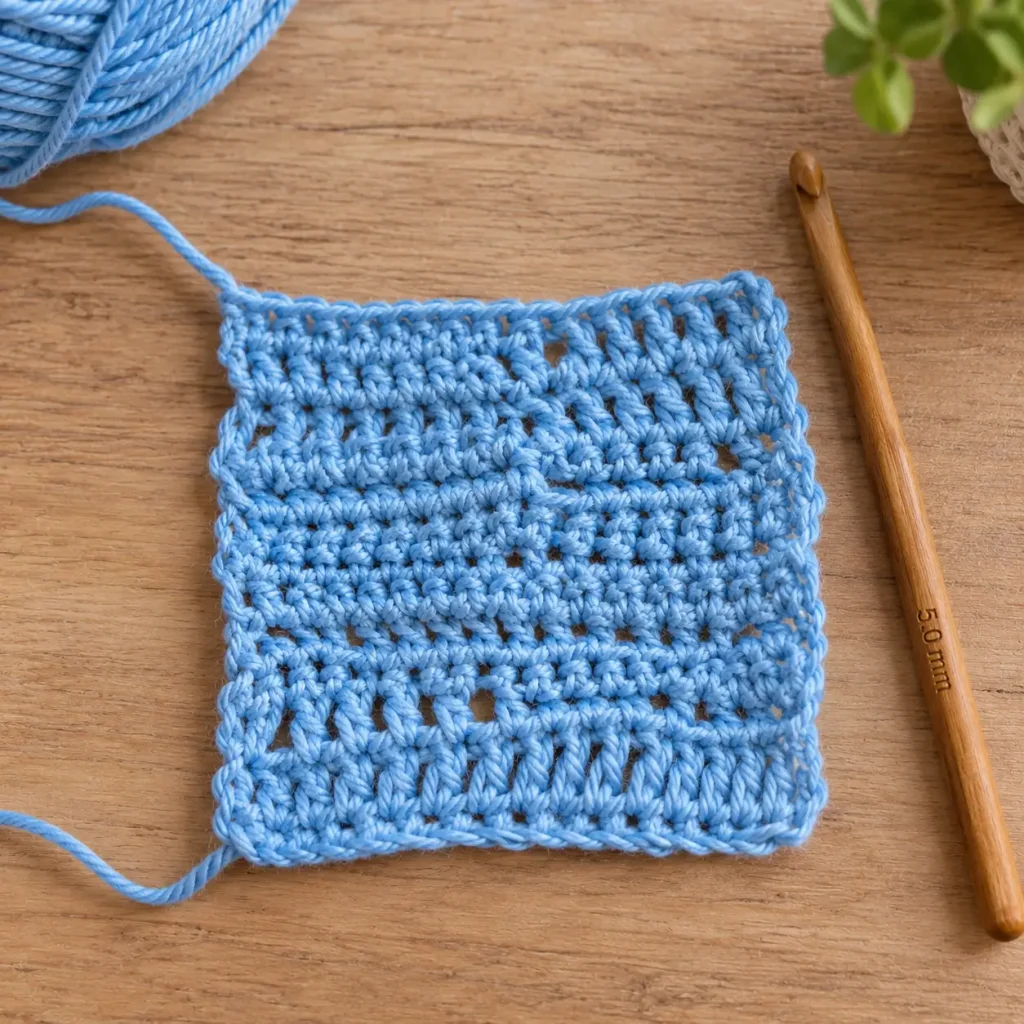
Half double crochet shows up across a huge range of projects because of its balance of speed and warmth:
- Blankets and afghans — the denser fabric holds heat well without taking as long to work as double crochet, making it a popular choice for larger projects where time matters.
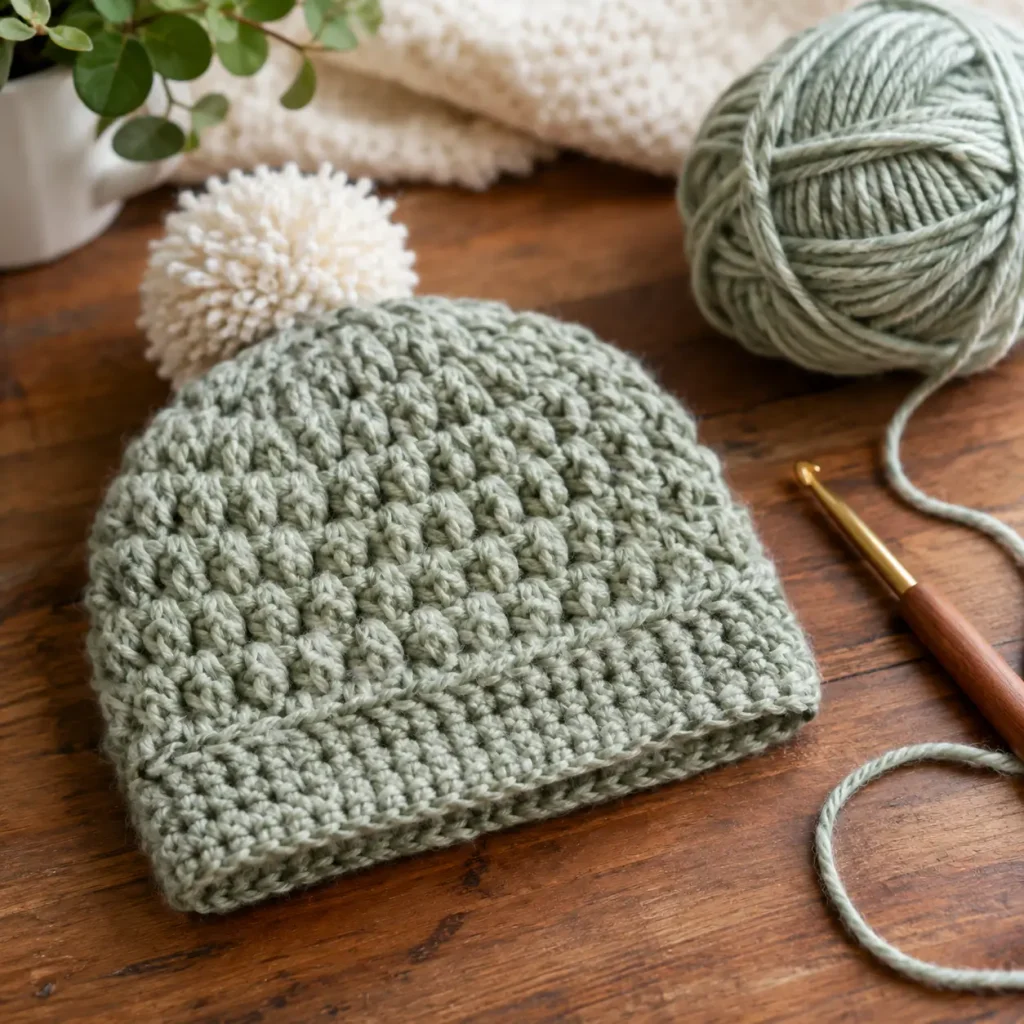
- Hats and beanies — like the brim section of the crochet baby bucket hat pattern, where a firm, structured fabric matters more than drape.
- Amigurumi bodies — some designers use hdc for larger amigurumi pieces where single crochet alone would take too long to complete.
- Garments — sweaters and cardigans often use half double crochet for a fabric that drapes better than double crochet but works up faster than single crochet.
- Home decor — placemats, coasters, and rugs often use hdc for a fabric with enough body to hold its shape without becoming overly rigid.
Practice Tips
- Practice on a swatch, not a project. Working half double crochet for the first time directly into a gift or pattern adds pressure that makes tension mistakes more likely.
- Use a contrasting stitch marker for your first few rows. Marking the first stitch of each row helps you stay oriented while you’re still getting used to the turning chain.
- Compare your swatch to a single crochet swatch. Working a small sample of both stitches side by side makes the height and texture difference immediately visible, which helps cement the distinction in your memory.
- Don’t worry about speed at first. Half double crochet naturally becomes faster once the yarn-over-then-pull-through-all-3 motion becomes automatic — accuracy matters more than speed while you’re learning.
- Revisit your swatch after a few days. Muscle memory for a new stitch often improves noticeably after a short break, so don’t judge your progress solely on your very first practice session.
FAQ
How long does it take to learn half double crochet?
Most people with basic single crochet experience can learn the core motion in about 10 minutes, though building consistent tension typically takes a few practice rows beyond that.
What’s the difference between half double crochet and double crochet?
Double crochet involves two separate pull-through steps (creating 2 loops, then 1), while half double crochet combines this into a single pull-through of all 3 loops at once, making it shorter and denser than double crochet.
Why does my half double crochet fabric look uneven?
Uneven fabric usually comes from inconsistent tension on the yarn over steps — try to keep the same amount of tension on your working yarn throughout each stitch, and check that you’re inserting into the same chain position each time.
Can I substitute half double crochet for single crochet in a pattern?
Not directly — since hdc is taller than sc, substituting it will change the finished size and drape of the project. Stick to the stitch specified in a pattern unless you’re intentionally experimenting with gauge.
Is half double crochet harder than single crochet?
Not fundamentally — it’s just one additional yarn over and a slightly different loop count on the hook. Most crocheters find it comfortable within their first few practice rows.
Do UK and US crochet terms use the same name for this stitch?
No — terminology differs by region, which is why it’s worth checking a pattern’s abbreviation key before starting, especially if a pattern was written outside the US.
Conclusion
Half double crochet is a genuinely useful stitch to add to your toolkit, and as this tutorial shows, the core motion takes only about 10 minutes to learn even if smooth tension takes a little more practice. Once you’re comfortable with it, try applying it to a real project like the crochet baby bucket hat pattern, which uses a similar firm, structured fabric. Whichever project you use it for next, half double crochet is a stitch worth having confidently in your toolkit.