Crochet Baby Bootie Pattern: 7 Styles Every Parent Should Know
A crochet baby bootie pattern comes in far more variety than most first-time gift-makers expect, and knowing the differences between styles helps you choose the right pair for the occasion, the season, and the parents’ taste. Unlike a single step-by-step tutorial, this guide compares seven distinct bootie styles, explaining what makes each one structurally different and which situations they suit best.
Baby booties are one of the most popular handmade gifts because they’re quick to make, use very little yarn, and hold real sentimental value for parents who keep them long after the baby has outgrown them. Below, you’ll find a breakdown of the most common crochet baby bootie pattern styles, how they compare, and practical guidance for choosing between them.
Table of Contents
Crochet Baby Bootie Styles at a Glance
Before comparing each style in detail, here’s a quick overview of how these seven crochet baby bootie pattern types differ in construction and typical use:
| Style | Skill Level | Best For |
|---|---|---|
| Classic Cuffed Bootie | Beginner | Everyday newborn wear |
| Mary Jane Bootie | Beginner to Intermediate | Baby showers, photos |
| Sneaker-Style Bootie | Intermediate | Modern gender-neutral gifts |
| Loop-Stitch “Fur” Bootie | Intermediate | Winter and holiday gifts |
| Bobble Stitch Bootie | Beginner to Intermediate | Textured, dressy occasions |
| Strap-and-Button Bootie | Intermediate | Secure fit for active babies |
| T-Bar Bootie | Intermediate to Advanced | Vintage-style keepsake gifts |
This comparison makes it easier to match a crochet baby bootie pattern to your skill level and the specific gift occasion, rather than picking a style at random and hoping it fits.
Why Bootie Styles Vary So Much
Most differences between bootie styles come down to two design factors:
- Sole and cuff construction — how the base is shaped and how the ankle opening is finished, which affects both fit and how easily the bootie stays on.
- Decorative technique — the stitch pattern or embellishment used on the top of the foot, which is largely what gives each style its distinct visual identity.
Understanding these two factors makes it much easier to see why, for example, a sneaker-style bootie and a Mary Jane bootie can use nearly identical soles but look completely different once finished.
1. Classic Cuffed Bootie
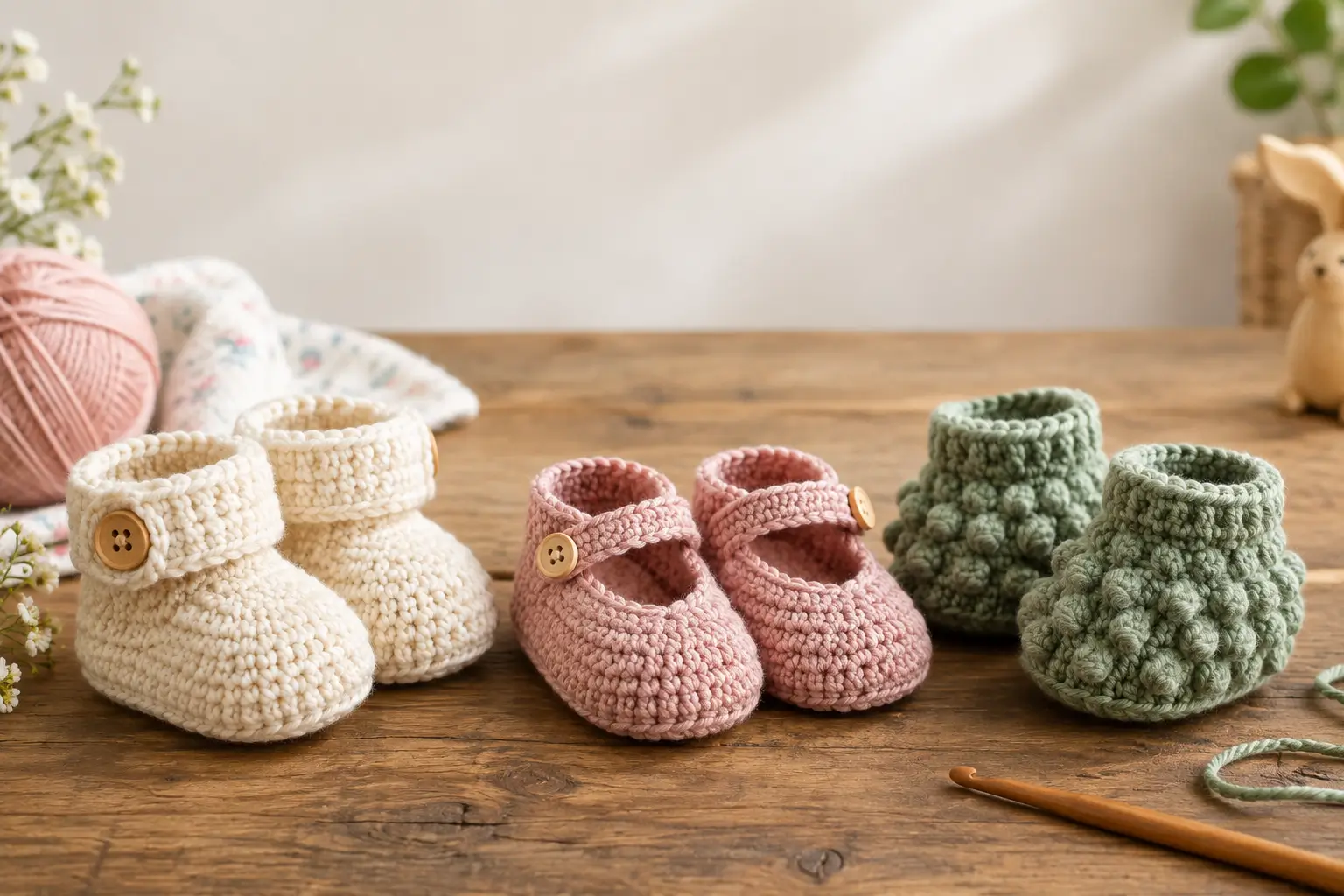
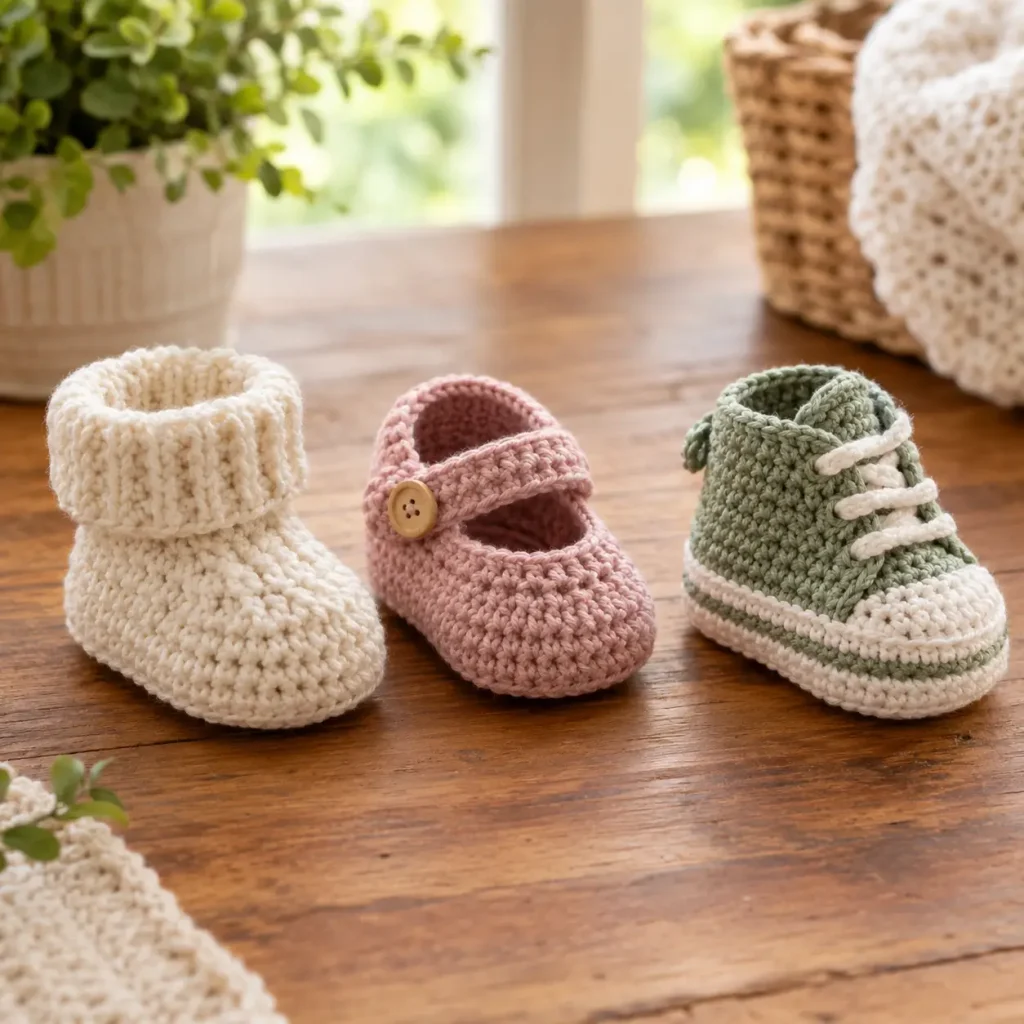
The classic cuffed bootie is the most common crochet baby bootie pattern style, featuring a simple rounded sole, a plain upper, and a folded-over cuff at the ankle. This is typically the first bootie style most crocheters learn, since it uses only basic increases and single or double crochet stitches.
Best for: Beginners, everyday wear, quick gifts
Skill level: Beginner
Typical use: Newborn essentials, hospital gift bags, quick baby shower gifts
2. Mary Jane Bootie
Mary Jane booties add a single strap across the top of the foot, mimicking the classic Mary Jane shoe style. This small addition — usually a chain loop and a button — is what separates this style from the classic cuffed bootie, giving it a slightly dressier, more “shoe-like” appearance.
Best for: Baby shower gifts, photo outfits
Skill level: Beginner to Intermediate
Typical use: Special occasions, gift sets, newborn photography props
3. Sneaker-Style Bootie
Sneaker-style booties are designed to mimic real sneakers, often including contrasting colors for the “sole” and “upper,” and sometimes a small crocheted lace detail across the top. This style has grown especially popular as a gender-neutral option that doesn’t read as traditionally “baby” in the way a classic cuffed bootie does.
Best for: Modern nurseries, gender-neutral gifts
Skill level: Intermediate
Typical use: Baby shower gifts, everyday wear for slightly older infants
The color-blocking and shaping involved make this one of the more visually striking options among crochet baby bootie pattern styles, though it also requires more attention to color changes than a single-color design.
4. Loop-Stitch “Fur” Bootie
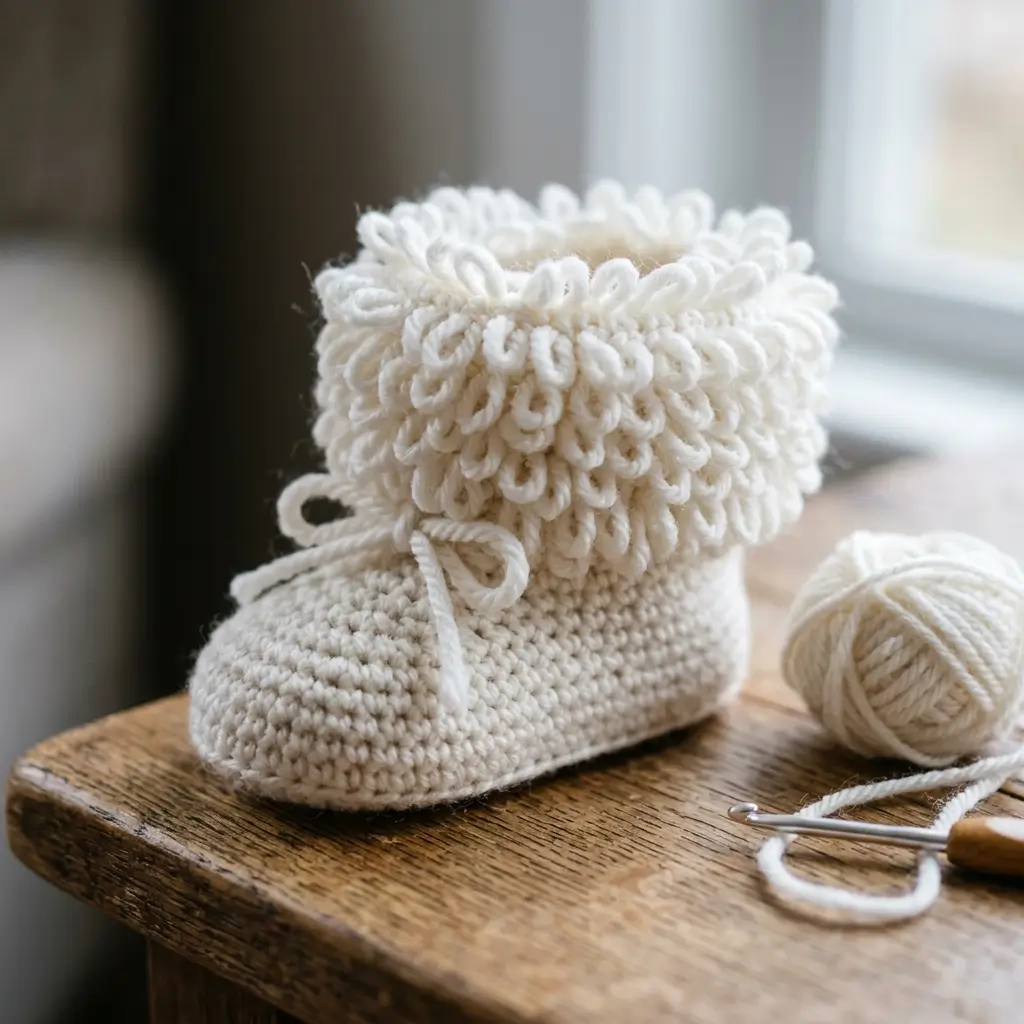
Loop-stitch booties use a specialized stitch that creates small yarn loops across the surface, mimicking the look of fur or fleece trim. This texture-focused style is less about the overall shape and more about the surface treatment, which can be applied to almost any base bootie shape.
Best for: Cold-weather gifts, winter baby showers
Skill level: Intermediate
Typical use: Holiday gifts, winter nursery sets
Because the loop stitch is worked differently from standard crochet stitches, this is often the first “specialty stitch” style a crocheter tries after mastering basic booties.
5. Bobble Stitch Bootie
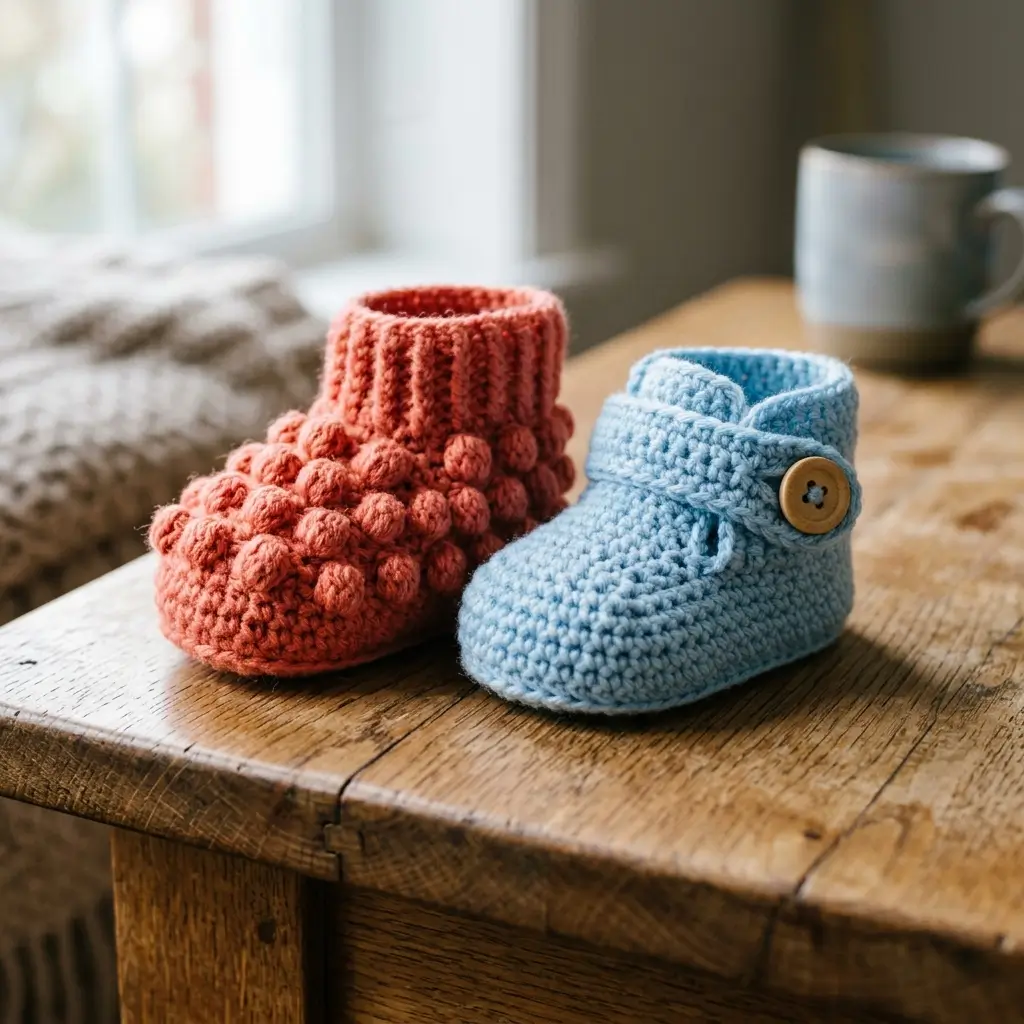
Bobble stitch booties use small raised bobble or popcorn stitches across the top of the foot to add dimensional texture without changing the bootie’s basic shape. This is a popular middle-ground style — visually more interesting than a plain cuffed bootie, but without requiring an entirely different construction method.
Best for: Crocheters comfortable with basic texture stitches
Skill level: Beginner to Intermediate
Typical use: Dressy gift sets, textured newborn photo props
6. Strap-and-Button Bootie
Strap-and-button booties use one or two adjustable straps that fasten with buttons, designed specifically to stay on more securely than a simple cuffed style. This makes them a practical choice for slightly older, more active infants who tend to kick off looser-fitting booties.
Best for: Parents of babies who are already moving and kicking
Skill level: Intermediate
Typical use: Everyday wear for infants 6 months and older
Unlike the purely decorative differences in styles like the Mary Jane or sneaker bootie, this design choice is primarily functional, solving a real problem parents mention often — booties that don’t stay on.
7. T-Bar Bootie
T-bar booties feature a vertical strap running from the toe area to the ankle strap, creating a distinctive “T” shape across the top of the foot. This is one of the more traditional, vintage-inspired crochet baby bootie pattern styles, often associated with heirloom or keepsake gifts rather than everyday wear.
Best for: Intermediate to advanced crocheters comfortable with more complex shaping
Skill level: Intermediate to Advanced
Typical use: Christening gifts, heirloom keepsakes, formal occasions
If you’d like to explore an even wider range of bootie styles alongside matching blankets and hats, the Crochet Baby Patterns Bundle on Etsy includes multiple bootie variations — including plush, Mary Jane, sneaker, and loop-stitch styles — along with coordinating pieces, which is a useful reference if you want to compare several designs side by side.
How to Choose the Right Style
- If you’re brand new to crochet: start with the classic cuffed bootie — it teaches the basic sole-and-cuff construction that most other styles build on.
- If you want something photo-worthy: the Mary Jane or T-bar styles photograph especially well for newborn photo sessions and baby shower gifts.
- If the baby is already mobile: prioritize function over decoration and choose the strap-and-button style, since staying on matters more than surface detail at this stage.
- If you’re gifting during colder months: the loop-stitch “fur” bootie adds a seasonal touch that a plain cuffed bootie doesn’t offer.
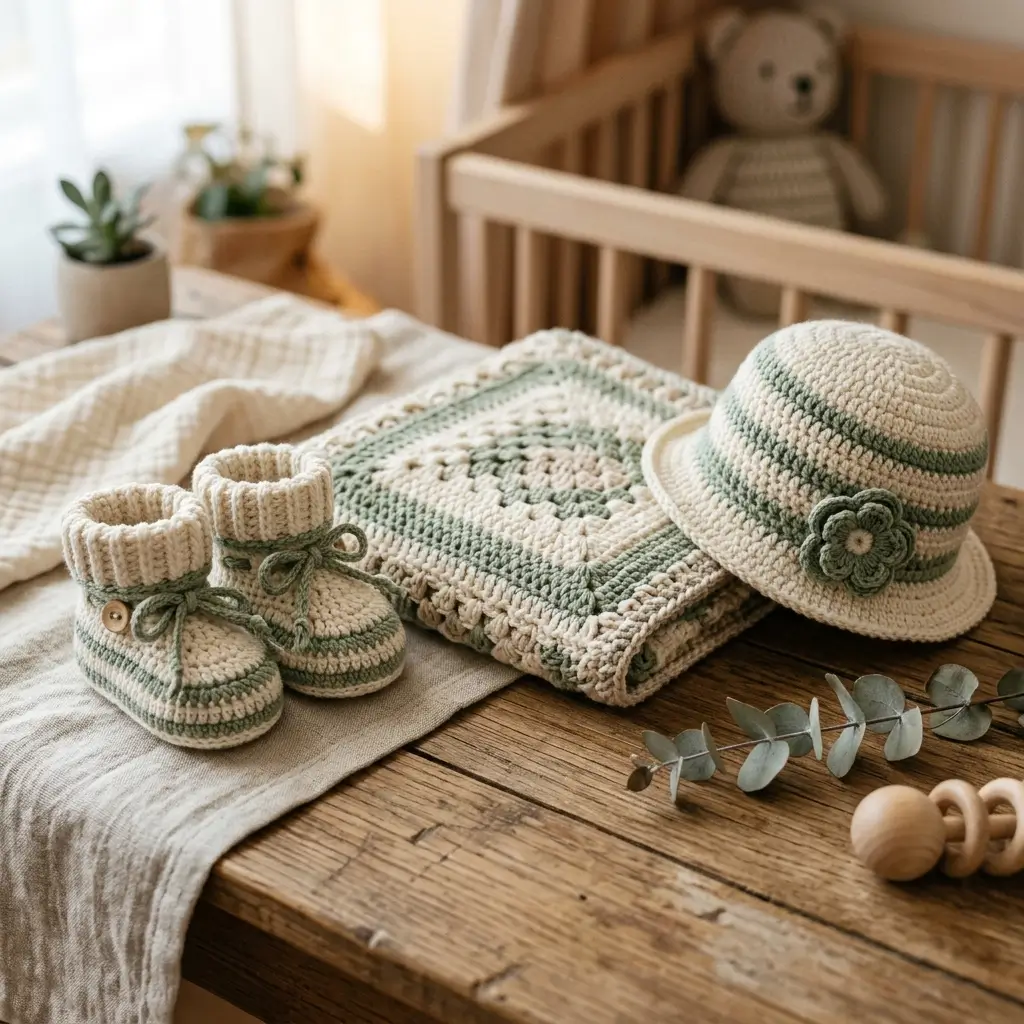
- If this is a gift-set project: bobble stitch or sneaker-style booties pair especially well with a matching crochet baby bucket hat or newborn blanket for a coordinated set.
Sizing Considerations Across Styles
Regardless of which crochet baby bootie pattern style you choose, sizing follows roughly the same age-based progression across most patterns:
- Preemie: approximately 7-7.5 cm foot length
- Newborn: approximately 8 cm foot length
- 0-3 months: approximately 9 cm foot length
- 3-6 months: approximately 10 cm foot length
- 6-12 months: approximately 11-11.5 cm foot length
Hook size typically scales with the sizing too — smaller sizes generally use a 3-3.5mm hook, while sizes for older infants (12 months and up) often move up to a 4-5mm hook to keep the fabric proportionally sturdy.
FAQ
What’s the easiest crochet baby bootie pattern style for a beginner?
The classic cuffed bootie is the most beginner-friendly option, since it uses only basic increases and simple stitches without any specialty techniques.
Which bootie style stays on best for an active baby?
The strap-and-button style is specifically designed to stay secure, making it the best choice once a baby starts kicking regularly.
Are loop-stitch booties harder to make than plain booties?
The loop stitch itself takes a little practice, but it’s not significantly harder — it’s simply a different technique applied to a familiar bootie shape.
Can I mix and match styles, like a Mary Jane strap on a sneaker sole?
Yes — many of these design elements (straps, loop texture, bobble stitches) can be combined with different sole and cuff constructions once you’re comfortable with the basic techniques.
What yarn works best across most bootie styles?
Worsted or DK weight cotton-blend yarn works well for most styles, since it holds shape without being too stiff for a baby’s foot, though loop-stitch styles sometimes benefit from a slightly softer yarn for the fur texture.
Conclusion
These seven crochet baby bootie pattern styles each serve a different purpose, from quick everyday essentials to dressy, photo-ready keepsakes — and understanding what sets them apart makes it much easier to choose the right one for your next gift or project. Whether you start with a simple classic cuffed bootie or work your way up to a more detailed T-bar design, there’s a crochet baby bootie pattern style suited to exactly what you’re making and who it’s for.